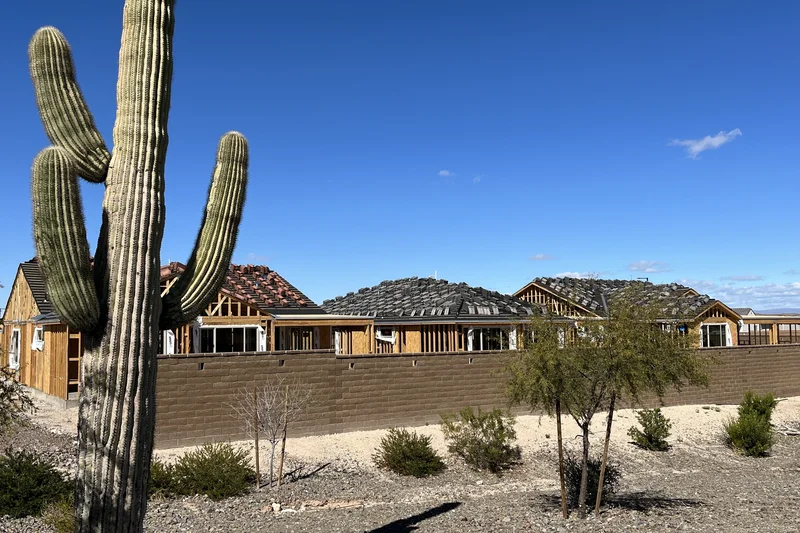
BUCKEYE, Ariz. — Drive traffic-clogged Interstate 10 through Phoenix's West Valley suburbs and you'd hardly know the Southwest is as dry as it's been in 1,200 years.
Water gulping data centers, large warehouses and distribution centers have sprouted in the barren desert. Housing development after housing development is slated for construction.
A two lane highway is being widened in the former farming town of Buckeye, at the edge of the Phoenix sprawl, to make way for an 800 home "master planned community." A sign advertises new homes coming soon with the offer of joining "the VIP interest list."
City officials proudly promote Buckeye as one of America's fastest growing cities. In 2000, the population was around 6,500. Today it's north of 111,000, according to the city's mayor Eric Orsborn. His city's master plan calls for future growth encompassing a staggering 640 square miles of open land to the south, west and north.
"For perspective, the city of Phoenix is about 518 square miles, so we have this massive footprint to grow into," Orsborn says.
Buckeye, Ariz. Mayor Eric Orsborn says his desert city's master plan allows for the growth of upwards of 300,000 residents in the coming decades.
Kirk Siegler/NPR
But where are they going to get the water? The answer is complicated.
People want to move to Arizona and Buckeye can't stop them
Phoenix is now America's fifth largest city. And the growth and economic boom particularly in its West Valley is continuing unabated despite larger questions about the future of water supplies amid a 23 year megadrought on the Colorado River.
Winter temperatures at the river's headwaters in the Rocky Mountains have risen by an estimated 3 degrees Fahrenheit since 1980, meaning less water for the region's snow fed reservoirs.
Arizona has some of the lowest priority rights to the river water of any of the seven basin states. So Phoenix and its suburbs are increasingly turning to groundwater as the state has endured big cuts to Colorado River water.
Comments
Post a Comment